Sunday, February 9, 2014

Night Vale: non-fiction vs fiction

For all of you Night Vale fans out there, here is an interesting thought on fiction and non-fiction...


Thank goodness this isn't true, though, or else there would be some parallel universe out there with a bunch of stalker-ish vampires running around fighting macho werewovles. 

Then again, it would be cool to find a universe with hobbits. 

[If you don't know what Night Vale is, learn more here.  Or you could start listening to the podcast and try to figure it out.]

Thursday, February 6, 2014

Mumbo Jumbled

I'll be honest, when I sat down to read this book for the first time, all I wanted to do was fling it out the nearest window and watch it sink into a pile of cold snow.


The only other time when I've wanted to destroy a reading assignment was when we read Ernest Hemingway's The Sun Also Rises last semester. I eventually learned to appreciate Hemingway's style, and hopefully I can do the same for Ishmael Reed's writing. It'll take some more work to convince me, though, because right now reading this book is like wading waist deep in a pool of mud. 

First of all, you can't just put numbers into the middle of a sentence like that. 1 would think that he was just a lazy writer who had 1000s of other things on his mind. 0r P3rH4p2 17's Ju57 W473R3D d0Wn l337 5p33K (2 can play at this game, Ishmael). Also, the weird names, new words, and the jumpiness of the chapters make it hard to concentrate but also make concentration essential to the understanding of the book. Can you see why I'm frustrated? On a more positive note, I do like the occasional pictures that go along with the story (like the invitation to the Chitterling Switch). 

It's like Reed is constantly trying to jab you awake as you read. He doesn't want us to fall "asleep" and get too comfortable reading this book. His writing gives us annoying mental pokes and says "Did you get that? Did you see what I did there?" He almost shoves the fact that he has complete control over the story in our faces. 

Well, at least he knows what he's doing. Perhaps we will too, eventually. 

I feel like this book is another good example of how an author can use metaphors to write however they please in order to prove a point. We know that Ishmael Reed must be a good writer, so if his writing style is strange to us, and if it breaks conventions that we're used to, then it must hold a deeper metaphorical meaning to it. If he's a good writer he wouldn't just mess up the structure because he didn't know any better. There was a deep thought process behind this book, and he's left it up to the reader to figure out what he's saying. So maybe reading this book can be a hunt for the hidden metaphor instead of a walk through deep mud. 

I'm slightly excited to see where this book will go and how the story will unfold. (I'm still a bit skeptical as to if I'll enjoy it or not, though.) For now, I shall go attempt to finish tonight's reading of Mumbo Jumbo, and hopefully this time my mind won't feel like scrambled eggs afterwards.

History and photojournalism

This photo of a baseball player popping some bubble gum reminded me of Tateh's silhouettes. Sanchez says that the silhouettes are full of empty space that can be interpreted however the viewer sees fit. Here, the editing gives the photo a crisp black and white look and draws your eye towards the bubble.  (Source: Michael Holahan)
One of the panel presentations given on Ragtime talked about  Jesús Sánchez's article "Doctorow's Ragtime: A Breach in the Frame of History." In this article, one of the many things that he discusses is the use of photography and images to define the past, and how those also are limited just like textual histories. 
"Texts, as well as pictures, construct an alternative world which will never reach the referential realm, since they are based on the absence of that which they seek to represent. [...] Besides their inherent failure as truthful representations, the history captured in the pictures, silhouettes and moving pictures is further confined by the unidirectionality of the artist's perspective."
I haven't quite figured out what Sánchez means by pictures being based on an absence of what they seek to represent, but I do see many comparisons between historical narrative and photojournalism--both share artistic qualities and limitations as a form of information. I've spent a while trying to think about how postmodernists would criticize photojournalism as a form of historical documentation, and basically what I've discovered is that photojournalism is just another form of narrative.

Sánchez points out that both textual narratives and photographic narratives are told with the artist's perspective or worldview. He says that this is what is so troubling to Theodor Dreiser in Ragtime is his search to find the perfect angle at which to view the world, and so he constantly turns in his chair longing for new perspective. Photojournalists and historians are also constantly turning like Dreiser--looking for new perspectives and ideas through which to view the past and the present. Narratives are limited by an artist's worldview, but this perspective is always changing. 

The photographer had to anticipate
this man's fire breathing so that they
could take the picture at just the right
moment (Source: Sanjeev Syal)

When you have a camera in your hand, you have to be constantly physically turning around. You have to see the action before it happens so that you can capture crucial moments on camera. It is these moments of action--from the brief flickers of emotion on someone's face, to the winning score in a sports event--that will tell the story. The entire point of photojournalism is to create a pictorial narrative of current events throughout the world. Whenever I was assigned on a photo project I would ask myself "what is the story I am trying to tell?" When you go into a project with a specific vision for what kind of story you want to tell, then you can focus on taking pictures that will support that narrative. You can anticipate what kind of shots you will need. Or, alternatively, you can take thousands of pictures, and then in editing fit several into a story and a coherent photo essay. Either way, successful photojournalists give meaning to their work by telling stories with sets of pictures, much like how historians give meaning to primary sources through narration and analyzation.


Here, the lines created by the praying
people draw your eye to the blocked 
traffic, giving a sense of how important
religion is to these people if they stop
in the middle of the road just to pray at
the right time (Source: Probal Rashid).
Similar to the historical fiction novel, photojournalism is an art that uses creativity to present a story, and sometimes it's this creativity that makes the message more powerful. Photographers use lines, patterns, colors, and the rule of thirds to frame images in such a way to draw your eye in a path on the photograph. The message of a certain picture can be changed or emphasized by a simple crop edit. The way that the photos are edited and framed help the viewer see what kind of story the photographer is trying to tell, much like metaphors and other writing techniques are used in historical novels.


In this picture your eye immediatly
goes to the face of Obama which is 
set in the rule of thirds, and then you 
see that the background is a picture of
a deindustrializing  American town.
The irony of this photo in that Obama
ran his campaign on the slogan
"Change," and yet this town is still
suffering. (Source: Jacob Ehrbahn)

 Finally, many times the photojournalist will create a photo essay to expose or comment on social conventions or political brokenness. There are many powerful photo essays that follow the journeys of people in the army, families trying to pay for health care, small town farmers struggling, and just about any other social problem you can think of. These photo narratives make others' struggles more real to us, and seeing a real face behind the story has more meaning than any editorial article written on the same subject. Yes, there can be many possible interpretations to a single photo, and yes, there will always be bias and certain perspective behind every photo essay, but that doesn't mean that we should disregard all photojournalism, just as we shouldn't disregard all historical narratives. Photojournalism, historical fiction, and historical narrative, all strive to give meaning to our lives by interpreting our past. Understanding that these are interpretations of the past, will then help us create our own individual meanings for our collective history. 

Here are some other photos I found that give powerful visual commentary on the struggling lower classes in America, much like how Ragtime's ironic narration inspired sympathy for the poorer classes. Instead of outright saying "Look at all these people and all these statistics that show how unjust this balance of wealth is," both Ragtime and photographs like these show the injustice through irony.


I'm sure this homeless man would be content with simply "enough." (Source: Humans of New York)

The irony of this poster during the Great Depression (Photographer: Dorothea Lange)
A homeless man prays over his food at a dining hall--note the framing of the photo with the American flag in the background. (Source: Jacob Ehrbahn)

-------------------------
There are countless other examples that I could have included. If you are more interested in the subject here are a few links to get you started:
Examples of photo essays
More historical photography
More photojournalism

Saturday, January 11, 2014

Making a case for South Park

A Dr. Seuss political cartoon from WWII. Political cartoons take real events and put a fictional spin on them to make them humorous and get across the artist's political ideas. (Source)
In class we talked about the differences between history and fiction, and we also came to the conclusion that history and fiction mesh together more than it seems at first glance. Myths and religion are two examples that we discussed. Religious stories, myths, and legends give humans a common identity with a community. I think that satire could be another example of where history and fiction come together to unite a group of people. 

Take, for example, the popular television show South Park. It's a rude and vulgar show that pokes fun at everything from infomercials to religion to the government. There's one episode where one of the characters tries to infiltrate the NSA to expose how they collect data on American citizens. In twenty minutes the show manages to make fun of the NSA, the DMV, Jehovah's Witnesses, social media, and Americans.

What makes satire history as fiction is the way it takes events and stereotypes of the present and then puts them in a fictional world where the author or artist can then criticize and make fun of them. It's artistic expression of recent history with extreme amounts of bias and personal opinion thrown in for humor.

Satire is like the comedic relief in a good movie. The movie's plot thickens and the tension rises, and what keeps the audience sane and attentive is the occasional comedic relief that allows them to relax and chuckle even though the plot still looms overhead.

By combining current issues with offensive and/or witty humor, satire helps people process what's going on in their world. The laughter is contagious. It creates a common identity by having people side against the enemy of the politician. But it isn't just politicians who are made fun of. Stereotypes, institutions, pop culture, almost anything can be turned on its head for the sake of humor. Satire gives people a chance to laugh at themselves, but can also be a tool to point out the flaws where we might need to look deeper at what's happening in our world.

Other famous examples of satire today would include The Colbert Report, The Daily Show, and The Onion


The Colbert Report
Get More: Colbert Report Full Episodes,Video Archive


Friday, December 13, 2013

Toni Morrison on Song of Solomon

Here is an interesting interview with Toni Morrison on Song of Solomon.

Towards the end of the video she mentions why she wanted Milkman to be obsessed with escaping and flying, and that was what I found most interesting because she tells us why she wanted to write the story in the first place. 

One thing I love about listening to interviews with authors is that you get to understand why they wrote what they did, and what they were thinking when they wrote it. You find out why it is significant to them and their lives. Sometimes I feel like we over analyze things in English classes, and I often find myself wondering what the author really was thinking and whether or not we interpret it completely differently.

That's the cool thing about any creative art form--everyone has their own interpretations based on how they connect to the book and sometimes these interpretations differ from the author's. That doesn't mean that we're wrong, but I do like getting to know the author's perspective on their work. (Too bad Shakespeare is dead because I would have had loads of questions for him about his plays.)

Make me a bird

Milkman's desire to fly away reminded me of Jenny in "Forrest Gump," only Milkman's motivations are quite different from Jenny's. 
The one thing that Milkman ever was obsessed with was flight. From an early age, he loved anything that could fly and always wanted to fly. This has an important impact on his development as a child because once he realizes that he cannot fly, he loses all interest in himself.

It's this loss of an interest in himself and an imagination that creates the unambitious and lazy Milkman in the next few chapters of the novel. Milkman is only looking out for his own safety, and he never really grows up because he isn't looking at himself critically on an introspective level. Milkman doesn't change because he doesn't think the change is necessary because he doesn't realize that a problem exists in the first place. He doesn't see the problem because he still has no interest in himself and refuses to examine his character. 


Deep down, all Milkman wants to do is escape. He wants to fly away and create a life different than that of the people back home. He hates the thought of becoming more like his father. Flight is the potential of the future, the great unknown--like the horizon beyond the hood ornament of the winged woman. Milkman wants to conquer this unkown future, but he doesn't want to give up his comfort at home. This leaves him stuck.  


This urge to escape is also a sign of immaturity on Milkman's part. He would rather run from problems than confront them, and he can get away with this because he is rich enough to afford a plane ticket. For example, when asked what he would do if he lived in Alabama amidst the rampant racism, Milkman responds that he would grab a plane ticket and fly away as quickly as he could. He doesn't think about solving some of his family issues, or trying to mend things with his friends, but instead takes a plane far away on a selfish quest for gold.


The ironic thing is that the more Milkman tries to fly away, the more he is reminded of and brought back to his family. He flies away to Pennsylvania and meets all of these people who tell him stories of his family. Also, Milkman is basically still carrying out his father's orders to find the gold, so he hasn't yet escaped his father's influence.


Milkman can't fly away, because it's like Guitar said "Wanna fly, you got to give up the shit that weighs you down." Milkman hasn't given up the things weighing him down. The things weighing him down, are his own ideas on privilege. He can't move forward in life because he is still stuck in the world where he has enough money to do whatever he wants. Milkman hasn't realized that there is more to life than money and personal safety and security. 


Perhaps Milkman will finally mature in the last few chapters of the novel. I'm excited to see how his character will (or won't) grow by the end of the novel. I have a theory though, that the song
Sugarman done fly, Sugarman done gone
Sugarman cut across the sky, Sugarman gone
will have something to do with Milkman and the ending of the book. 

Wednesday, December 11, 2013

Creative Project: Antoinette's Insanity


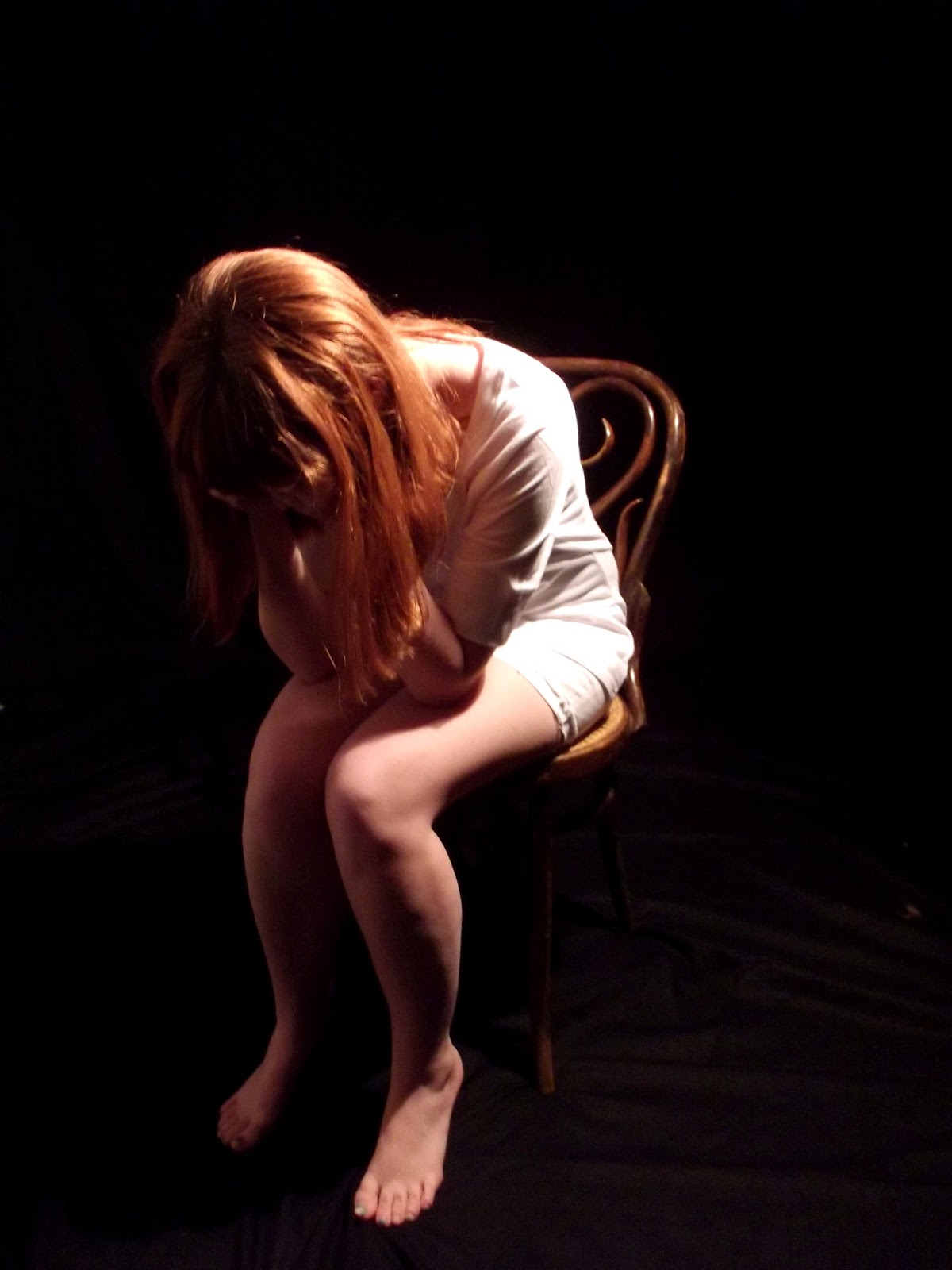
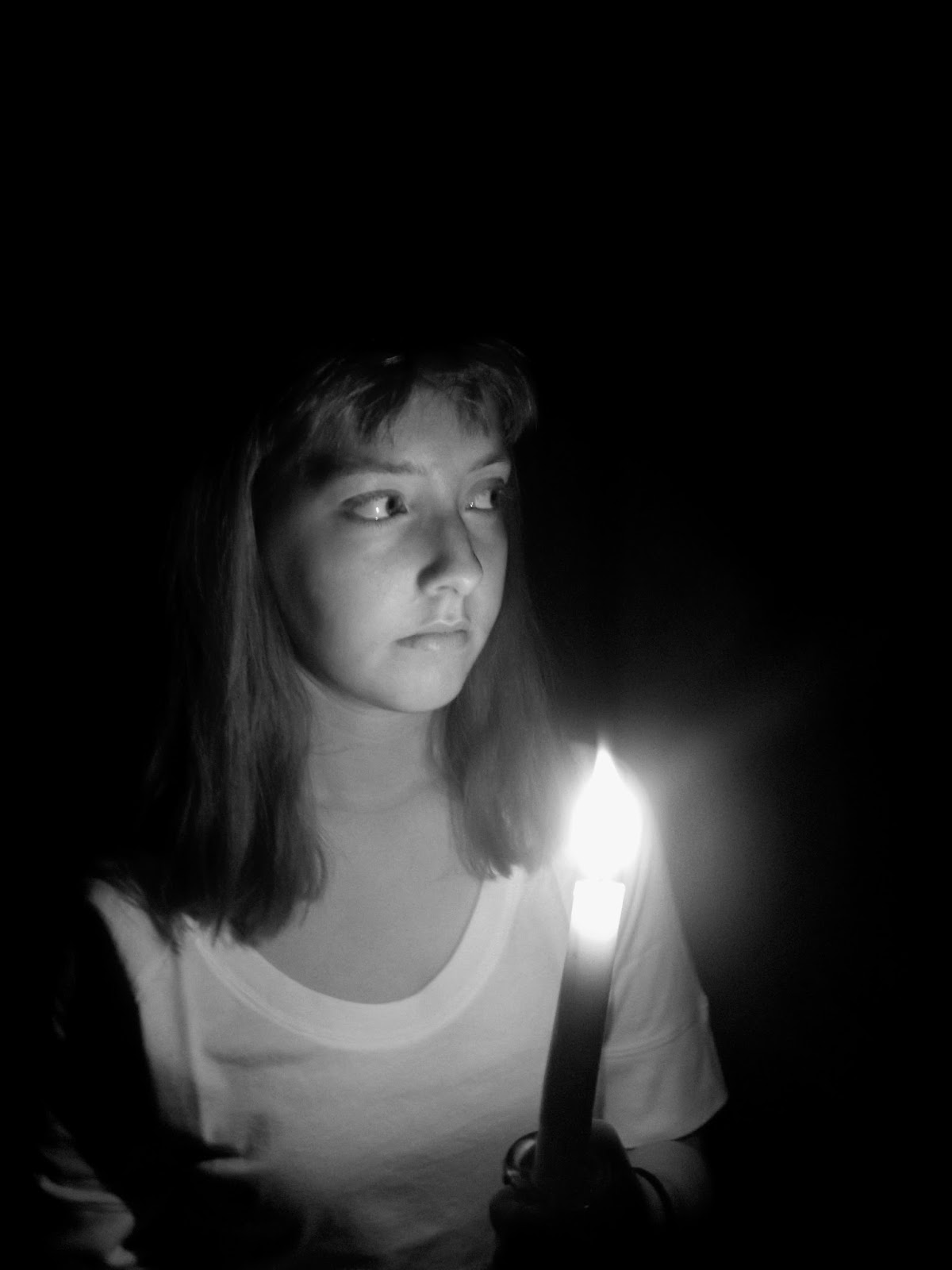
For my creative project this semester I decided to use photography to illustrate Antoinette's experiences in her attic prison. I chose to have an all dark background, with minimal colors in the actual pictures, to accentuate the dramatic scenes and thoughts that Antoinette experiences. The body language and facial expressions in the photos are the main focus. Another reason for the black background is because of Grace Poole's quote that calls Antoinette "that girl who lives in her own darkness." 

I decided to put the photos where Antoinette explores outside of the attic in black and white because to the outside world Antoinette is only a forgotten ghost. 

These photos were all inspired by actual quotes in the novel. 

(Thanks to Allie Hartman for being such a patient and amazing model, and thanks to my sister and my mother for helping me arrange the lights and the props.)

---------------------------------------------------------------------------------------------------

"But above all the thick walls, keeping away all the things that you have fought till you can fight no more. Yes, maybe that's why we all stayed -- Mrs Eff and Leah and me. All of us except that girl who lives in her own darkness." (Rhys 178)

"I'll say one thing for her, she hasn't lost her spirit. She's still fierce. I don't turn my back on her when her eyes have that look. I know it." (Rhys 178)

"In the end flames shoot up and they are beautiful. I get out of bed to watch them and to wonder why I have been brought here. For what reason? There must be a reason. What is it I must do?" (Rhys 179)

"So there is still the sound of whispering that I have heard all my life, but these are different voices." (Rhys 180)
"When she is snoring I get up and I have tasted the drink without colour in the bottle. The first time I did this I wanted to spit it out but I managed to swallow it. When I got back into bed I could remember more and think again. I was not so cold." (Rhys 179)
"There is no looking-glass here. and I don't know what I am like now. I remember watching myself brush my hair and how my eyes looked back at me. The girl I saw was myself yet not quite myself. Long ago when I was a child and very lonely I tried to kiss her. But the glass was between us -- hard, cold, and misted over with my breath. Now they have taken everything away. What am I doing in this place and who am I?" (Rhys 180)
(This is one of my favorite shots, aside from the abysmal photoshop editing, because I love the way it shows the current Antoinette remembering her past Antoinette through a mirror. The image of the looking glass pops up several times throughout the novel, so I was even more excited to try out mirror photography.)

"Then I open the door and walk into their world. It is, as I always knew, made of cardboard. I have seen it before somewhere, this cardboard world where everything is colored brown or dark red or yellow that has no light in it. As I walk along the passages I wish I could see what is behind the cardboard." (Rhys 181) 

"She met another girl and the second girl said, 'Have you seen a ghost?' -- 'I didn't see anything but I thought I felt something.' -- 'That is the ghost,' the second one said and they went down the stairs together." (Rhys 182)
 (For this photo I did everything I could to make Antoinette look as much like a ghost as possible.)


"I took the red dress down and put it against myself. 'Does it make me look intemperate and unchaste?' I said. [...] But I held the dress in my hand wondering if they had done the last and worst thing. If they had changed it when I wasn't looking. If they had changed it and it wasn't my dress at all -- but how could they get the scent?" (Rhys 186)

"Time has no meaning. But something you can hold like my red dress, that has meaning [...] The scent that came from the dress was very faint at first, then it grew stronger. The smell of vetivert and frangipanni, of cinnamon and dust and lime trees when they are flowering. The smell of sun and the smell of rain." (Rhys 185)

"I let the dress fall to the floor [...] I looked at the dress on the floor and it was as if the fire had spread across the room. It was beautiful and it reminded me of something I must do. I will remember I thought. I will remember quite soon now." (Rhys 186-187)

"I wished to see it clearly so I lit all the candles, and there were many. I lit them carefully from the one I was carrying but I couldn't reach up to the chandelier. I looked round for the altar for with so many candles and so much red, the room reminded me of a church." (Rhys 188)
(The quote here is taken from Antoinette's nightmare, so I tried to make the photo dream like. Here, she is sleeping among many candles, seemingly floating in mid air. )
"I waited a long time after I heard her snore, then I got up, took the keys, and unlocked the door." (Rhys 190)

"I was outside holding my candle. Now at last I know why I was brought here and what I have to do." (Rhys 189)

"There must have been a draught for the flame flickered and I thought it was out. But I shielded it with my hand and it burned up again to light me along the dark passage." (Rhys 189)